Alphamega Stadium: Gridlock in Kolossi Needs Park & Ride, Not More Asphalt
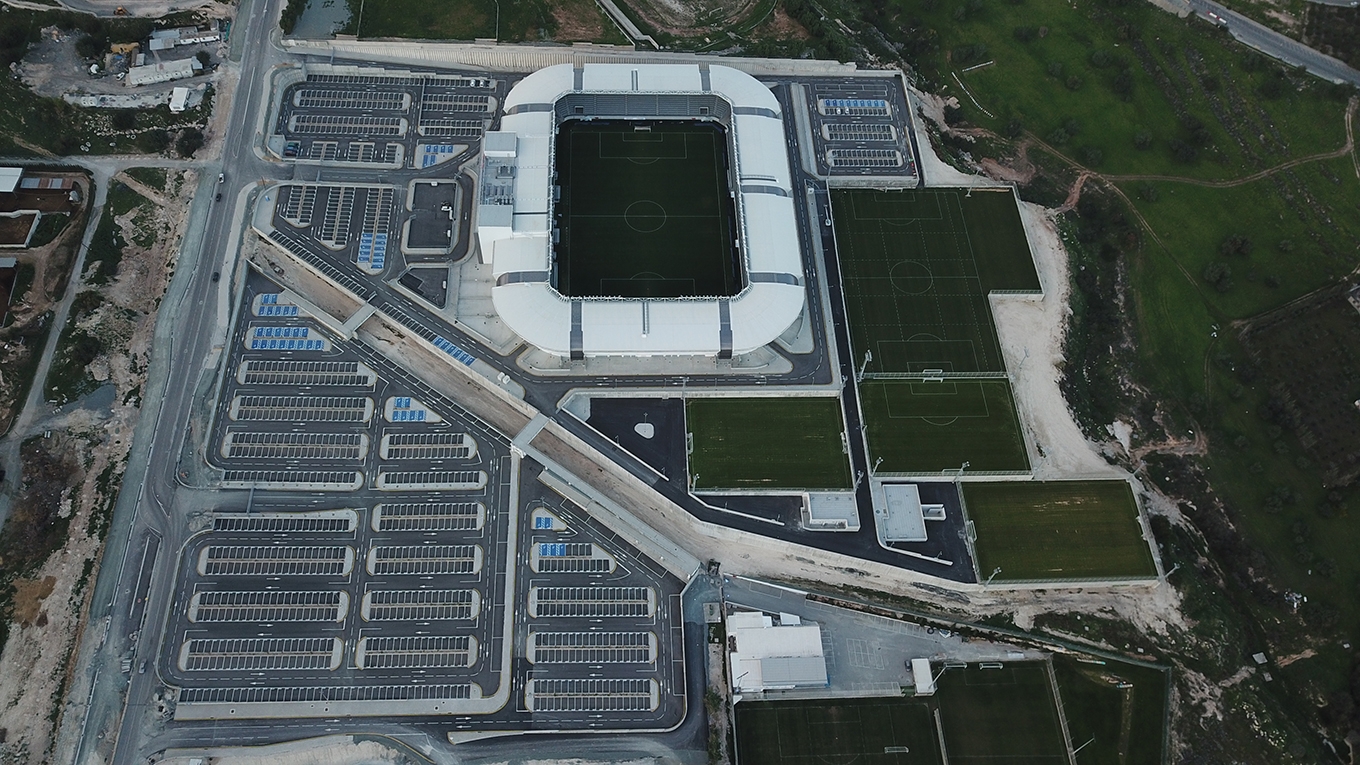
A Predictable Gridlock at Every Kick-Off
The opinion piece in the Politis newspaper describes a reality thousands of drivers experience whenever a match takes place at Alphamega Stadium in Kolossi. Traffic queues stretch for kilometers along the highway, backing up past the Polemidia roundabout, causing severe bottlenecks at the off-ramps to Kolossi and Ypsonas, spurring chaotic parking on curbs and dirt roads, and disrupting daily routines for nearby communities.
This disruption comes as no surprise. It was a foregone conclusion the moment a 10,000-seat stadium was built at an interchange without integrating a dedicated, high-capacity mass transit network.
The Myth of Building More Road Capacity
The default response from authorities and sporting officials is to demand new roadworks: opening extra bypass exits, widening lanes, and reconfiguring roundabouts. This falls squarely into the trap of induced demand.
When a single venue concentrates 8,000 to 10,000 spectators within a one-hour window and the vast majority travels by private car, no road network can absorb that volume. Assuming an average vehicle occupancy of two passengers, roughly 4,000 to 5,000 cars attempt to enter and park around Kolossi at roughly the same time. Neither the highway nor the local roads can handle that surge in a few minutes, regardless of how many asphalt lanes are added.
Managing traffic around major stadiums does not happen through more asphalt. It requires shifting how spectators travel (modal split).
Park & Ride Has Already Worked in Limassol
There is no need to reinvent the wheel. Limassol has already demonstrated that a structured Park & Ride system delivers smooth traffic flow during major sporting events.
The operations run during large events in the city, such as EuroBasket games at the Spyros Kyprianou Arena, proved this approach on the ground. For those matches, private vehicle access immediately surrounding the arena was restricted, remote parking hubs were organized across Limassol, and frequent shuttle buses transported fans straight to the stadium gates. The result was clear roads, no highway queues, and swift, safe departures.
If this transit model worked smoothly for international tournaments, there is no sound reason not to deploy it on a permanent basis for domestic league fixtures in Kolossi.
Practical Steps for Implementation at Alphamega Stadium
Applying this model requires three straightforward measures:
- Combined match and transit ticket (Kombi-Ticket): The match ticket acts as an automatic, free boarding pass for EMEL buses two hours before and two hours after the game.
- Dedicated Park & Ride hubs across Limassol: Designating strategic parking facilities such as the Tsirio Stadium, the New Port parking area, and Polemidia, where non-stop express shuttle buses depart directly for the stadium gates.
- Dedicated matchday transit lane: Temporarily reserving one lane along the primary access approach for buses and emergency services during peak arrivals and departures, ensuring public transit bypasses any queue.
Intelligent Transport Systems: The Unusable VMS Displays
Managing matchday travel demand relies on real-time communication tools, yet basic execution in Cyprus remains stalled by bureaucracy.
Electronic Variable Message Signs (VMS) were installed along the highway toward Kolossi over a year ago. They remain dark and completely inactive because the Ministry of Transport claims to be waiting on the Electricity Authority of Cyprus (EAC) for electrical grid connections. Leaving modern digital ITS infrastructure sitting idle for months on a critical national corridor highlights an acute administrative failure.
These signs should already be broadcasting real-time parking occupancy before the Polemidia and Ypsonas junctions, alerting drivers well in advance and redirecting them to peripheral Park & Ride facilities.
Furthermore, on key Limassol arterials leading to the highway (such as Nikou Pattichi and Spyrou Kyprianou), implementing dynamic traffic signal timing during match departure hours would ensure transit shuttles navigate out of the city without getting trapped at local intersections.
Time for a Mandatory Stadium Travel Plan
The congestion around Kolossi will not be solved by sending a handful of traffic wardens to manually direct gridlocked roundabouts.
The Ministry of Transport, the Cyprus Football Association (CFA), the three tenant Limassol clubs, and the stadium management company must establish an enforceable Stadium Travel Plan. Past experience in Limassol proves that Park & Ride delivers real relief. What remains is the political will to apply it in Kolossi, while finally connecting the idle digital signage already sitting on the highway.
About ITS Cyprus
ITS Cyprus brings together public authorities, research and industry to advance Intelligent Transport Systems in Cyprus, through initiatives such as Road to Zero Cyprus for road safety.
Learn more about ITS Cyprus →