Scooters in Cyprus: The Problem Isn’t the Wheels, It’s the Asphalt
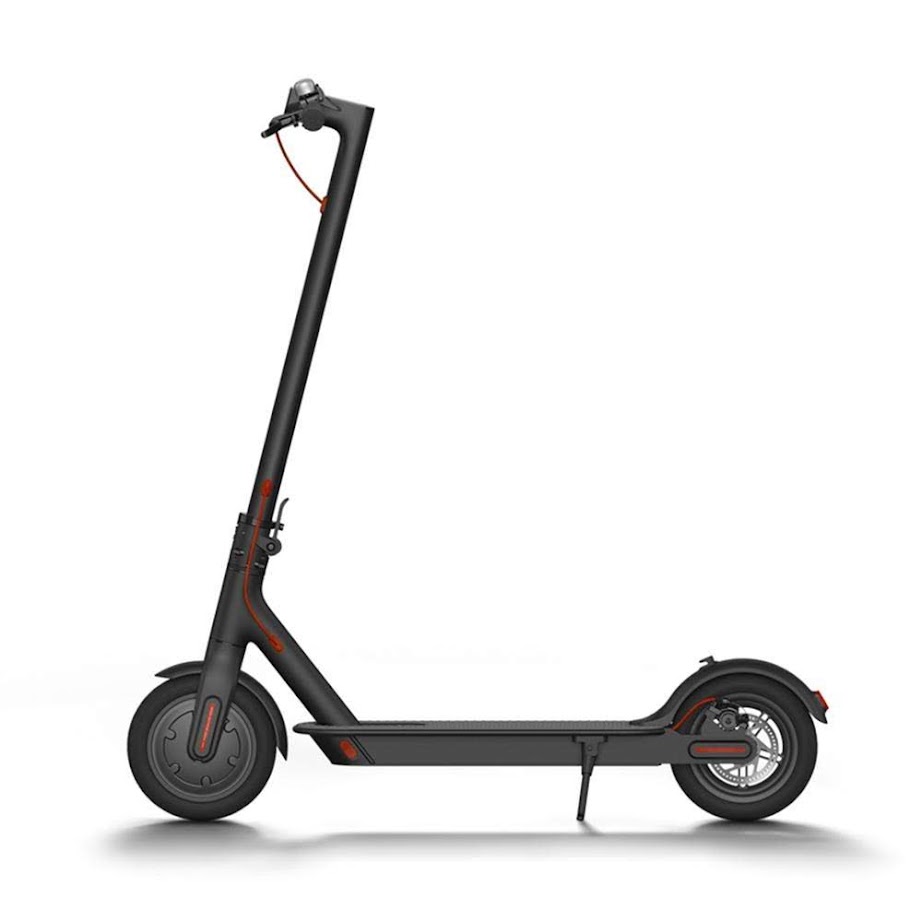
The parliamentary debate in Cyprus over electric scooters has flared up again, spurred by figures recently presented to the Transport Committee. In the first eight months of the year, reported violations surged to 5,141, seven injuries of varying severity were recorded, and two riders lost their lives in Limassol. These numbers brought full bans, vehicle confiscations, criminal prosecution of minors, and mandatory registry schemes right back to the table.
The frustration among pedestrians is completely reasonable. Anyone walking along the Limassol seafront on a summer evening has been startled by an e-scooter flying past at 30 or 40 km/h. To make matters worse, the local market has been flooded with unrestricted devices capable of 60 or even 80 km/h, often operated by teenagers. That is a real, legitimate safety concern. Even so, the idea that blanket bans or endless confiscations will solve the issue turns the underlying problem completely on its head.
What the Crash Data Actually Tells Us
Forty-five people lost their lives on Cypriot roads in 2025, marking the worst five-year toll at 46 deaths per million residents. European Commission crash data shows that 44% of those fatalities were car occupants, 21% were motorcyclists, 18% were pedestrians, and 9% were cyclists. E-scooters and personal mobility devices accounted for barely 1% of total losses.
Even this year, with the steep rise in police fines and two fatal incidents in Limassol, the overwhelming majority of serious and fatal collisions continue to involve motor vehicles. If the case for an outright ban were based purely on fatality numbers, cars would have been taken off the road decades ago. Nobody proposes that, because modern cities need transport to function. Road safety policy is not built by banning whatever irritates people at a given moment, but by looking at where danger concentrates and fixing the physical space.
Speed and Missing Infrastructure
The OECD International Transport Forum pointed out in its Safe Micromobility report that the noise around e-scooters should never distract policymakers from the primary source of danger in urban traffic: heavy motor vehicles. In Cyprus, roughly half of all road victims are outside of a car, while over 60% of road deaths occur within urban areas. These people are not dying because e-scooters exist. They are dying because streets were designed solely to move cars through towns quickly, with no safe space built for anyone else.
The Police themselves acknowledged in Parliament that the vast majority of the 5,141 citations stemmed from riding in unauthorized areas. Riders do not weave in and out of pedestrians on pavements because it is enjoyable; they do it because riding mixed into fast car traffic feels terrifying. When a bike lane runs for two hundred meters and abruptly ends, riders end up right back where we see them today. Without a continuous, protected path on the roadway, riding naturally spills onto the pavement.
The Seville Example
The standard pushback in Cyprus is that proper infrastructure takes decades and impossible budgets. Seville showed otherwise. Back in 2006, the city had just 12 kilometers of disconnected bike lanes, a car-dominated streetscape, and a climate very similar to ours. Within 18 months, the municipality built an 80-kilometer segregated network, expanding to 120 kilometers by 2010 at a total cost of 32 million euros. Daily bike and micro-trips increased tenfold in three years.
That turnaround worked because of two key choices: the network was built all at once across the city rather than in useless fragments, and the space was carved out of on-street car parking lanes, leaving pavements entirely to pedestrians. That remains the only realistic blueprint for Cypriot cities as well.
Rules Are Not the Enemy, Bans Are
Targeted, sensible regulation works. Helsinki brought in lower speed limits and nighttime fleet curbs for shared scooters, which cut scooter-related emergency facial injuries by up to 88% across certain months. Helmets, proper lighting, strict customs enforcement to stop the import of scooters reaching 80 km/h, and parental accountability for underage riding are all practical, defensible measures.
What will not work is turning municipal crews and police officers into full-time scooter hunters. Municipalities have already stated that they lack the staff and storage space to impound thousands of devices, while police figures show that mounting citations do nothing to solve the underlying problem. Confiscating a scooter from a teenager along the Limassol promenade does nothing to make the multi-lane road right next to it any safer for someone not wrapped in steel.
Practical Next Steps
- Build complete corridors immediately: Pick primary urban corridors in Limassol, Nicosia, and Larnaca and commit to continuous protected lanes within two years, avoiding piecemeal segments that end at busy intersections.
- Reallocate space from on-street parking: Pavements are already far too narrow. The only realistic place to carve out safe, dedicated lanes is from the curb space currently used for street parking.
- Enforce 30 km/h through street design: Lower neighborhood speeds by modifying the physical layout, using raised crossings, narrowed lanes, and tighter turning radii that prevent drivers from speeding.
- Regulate device specs and imports: Ban the commercial import and sale of overpowered devices that reach motorbike speeds without registration, lights, or braking capability to match.
- Enforce pavement rules once lanes exist: Once riders have a genuine, protected space on the road, riding on pavements becomes inexcusable, making fines both fair and effective.
Banning scooters allows authorities to look decisive on road safety while leaving the remaining 99% of urban road risks completely untouched. Thousands of citations show clear public demand for light urban transit alongside an acute shortage of safe space to use it, not a reason to outlaw it. The central question is not whether to banish scooters, but whether cities are ready to reassign a fraction of car space so everyone can get around safely.
Sources
- European Commission Road Safety Data for Cyprus (2025), reported by CNA and Politis
- International Transport Forum (OECD), Safe Micromobility (2020) and 10 Recommendations for Safe Micromobility
- European Commission Road Safety Country Profile, Cyprus
- Interreg Europe and Transportation Research Part A, Seville cycling network case study (2006–2010)
- Studies on legislative curfews and e-scooter injuries in Helsinki, Finland
About ITS Cyprus
ITS Cyprus brings together public authorities, research and industry to advance Intelligent Transport Systems in Cyprus, through initiatives such as Road to Zero Cyprus for road safety.
Learn more about ITS Cyprus →