Five Million Euros for Smart Parking: High-Tech Sensors Cannot Fix Limassol Without Transit Priority
Upgrading the Curb or Simply Upgrading the Cash Register
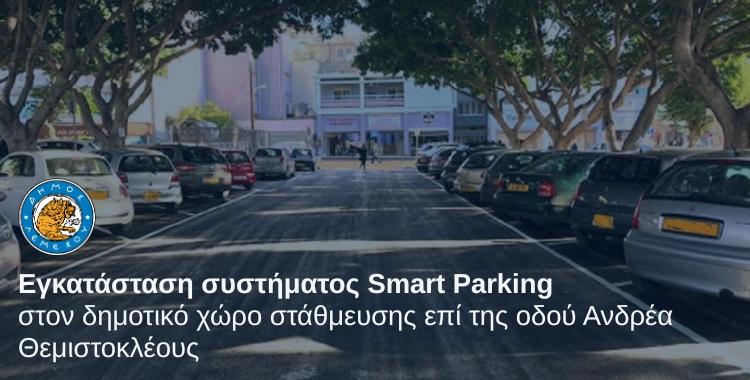
The recent approval by the Limassol Municipal Council of a commercial contract worth 5.17 million euros for a citywide Smart Parking system marks a major technological milestone. Covering 2,211 spaces across municipal surface lots and curbside bays, the system uses magnetic ground sensors and automated barriers to manage parking availability and collect hourly fees.
The deployment of Intelligent Transport Systems (ITS) to manage curb space is fundamentally sound. In crowded urban centers, cruising traffic—drivers circling blocks at low speeds searching for an open space—accounts for up to 30 percent of total vehicular congestion. Providing real-time navigation directly to available bays reduces intersection friction and idle engine emissions. However, spending over five million euros of public funds on sensor technology raises a critical transport planning question: is this system being deployed to manage urban mobility, or is it merely functioning as an expensive electronic ticket machine?
The Contradictions in the Operating Policy
The operational parameters approved for the six-month pilot reveal several policy contradictions that undermine the stated mobility objectives:
- Free evening and Sunday parking: Waiving curbside charges after 19:30 and throughout Sunday directly subsidies private vehicle use during the peak operating hours of restaurants, theaters, and seaside cafes. When on-street parking outside venues is free, vehicle turnover collapses. Drivers circle residential lanes endlessly, and sidewalks are routinely overrun by vehicles whose drivers refuse to pay for off-street garages.
- Penalising captive users without reliable alternatives: Concerns raised by councillors and university student representatives reflect a legitimate planning grievance. Charging workers and students who must reach the center every day without first delivering high-frequency, reliable bus corridors turns parking management into a regressive flat tax. The peripheral parking lot on Aiolou Street paired with municipal shuttles is a positive step for students, but it remains an isolated measure.
- The enforcement blind spot: Smart ground sensors only detect vehicles positioned correctly inside marked bays. They do nothing to deter drivers who casually park on corners, across pedestrian ramps, or inside yellow box junctions with their hazard lights flashing.
A smart parking scheme cannot succeed in an environment where illegal parking carries zero operational consequence.
What Real Parking Management Looks Like in European Cities
European cities that successfully reformed their downtowns did not treat smart parking as a standalone revenue program. They integrated it into a broader mobility framework:
- Dedicated revenue recycling: Parking revenues generated from curbside meters in cities like Barcelona and Zurich do not vanish into general municipal accounts. They are legally ring-fenced to fund local public transit, subsidised micro-mobility passes, and shaded walking infrastructure.
- Dynamic availability pricing: Rather than imposing arbitrary flat fees, prices adjust dynamically based on occupancy data, ensuring that roughly 15 percent of spaces remain open on every block. This eliminates cruising traffic entirely while guaranteeing access for brief, essential errands.
- Automated compliance monitoring: Instead of relying on manual foot patrols to issue paper tickets, sensor networks work in tandem with automated camera scan-cars that clear illegal parking on adjacent pedestrian and bus corridors in real time.
Measuring Success by Mobility Outcomes
A five-million-euro investment in transport technology must deliver tangible improvements to public space and street safety. Success cannot be measured solely by the volume of parking receipts deposited into municipal bank accounts.
If the six-month pilot is to justify its cost, the Municipality of Limassol must evaluate the system against real indicators: the reduction of illegal sidewalk parking, faster bus running times through the center, and the redistribution of revenue toward active travel. Technology alone will not save Limassol from traffic paralysis unless the city has the discipline to prioritize pedestrians and transit over private car convenience.
--- Reference: Based on contract reporting and council debates published by [Elemesos.com](https://www.elemesos.com/xeperna-ta-5-ekatommyria-evro-to-smart-parking-sto-dimo-lemesou/).
About ITS Cyprus
ITS Cyprus brings together public authorities, research and industry to advance Intelligent Transport Systems in Cyprus, through initiatives such as Road to Zero Cyprus for road safety.
Learn more about ITS Cyprus →