Heavy Trucks in Peak Traffic: The Answer Isn't a Blanket Ban, It’s the Tech We Already Own
English Version
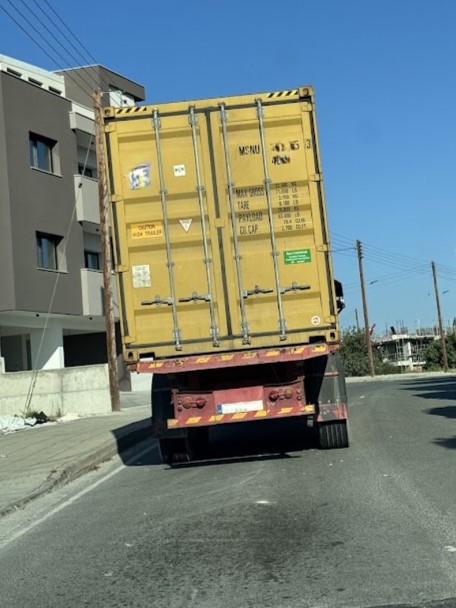
A recent motorway collision, in which a heavy goods vehicle rear-ended a passenger car, has resurfaced an ongoing debate: should heavy vehicles be barred from Cypriot motorways during peak commute hours? Public concern is entirely justified. The real issue, however, is how such a measure can work in practice on a small island where all freight depends exclusively on roads.
The Physics of the Road
The Safe System approach, which underpins Road to Zero Cyprus, recognizes that drivers make mistakes, meaning street design must prevent these errors from turning fatal. Vehicle mass is a decisive factor here. A fully loaded lorry weighs many times more than a passenger car and takes a far longer distance to come to a stop.
When that mass moves through stop-and-go morning or afternoon peak traffic, the risks multiply quickly. A split second of distraction or a delayed reaction releases kinetic energy that no standard passenger car was engineered to withstand. Separating heavy vehicles from heavy commute traffic is an established, practical method internationally for reducing fatal crashes.
How Other Countries Handle It
Several European countries limit freight traffic at specific times. Germany, France, Austria, and Greece all restrict lorry movements on weekends or public holidays, keeping heavy vehicles off the asphalt when private car volumes are high.
European road safety frameworks consistently focus on shielding vulnerable road users from massive vehicles. Time-based separation, which keeps heavy trucks off crowded motorways during peak hours, is one of the most straightforward and cost-effective tools available.
The Cypriot Reality
Simply copying these continental models in Cyprus ignores our lack of alternative networks. Large European nations move bulk freight by rail and offer multiple trunk roads between major hubs. Cyprus has neither. Nearly every imported good enters through the ports of Limassol and Larnaca, and the only viable route inland runs directly along the A1, A2, and A6 motorways.
A blanket ban during morning and afternoon peaks would gridlock the ports and trigger major supply delays for everything from fuel to perishable groceries. A rule that ignores commercial logistics will quickly be abandoned, reinforcing the false idea that road safety and the economy are in conflict. The real answer is not an indiscriminate ban, but targeted traffic management using technology to distinguish between urgent deliveries and freight that can wait.
Smart Systems: The Theory Versus the Local Reality
Relying on a police officer standing at an on-ramp or a static metal sign will never manage modern traffic flows. Real enforcement requires Intelligent Transport Systems (ITS) that manage road access dynamically based on clear rules. The irony in Cyprus is that much of this equipment has already been purchased, yet it sits largely underutilized.
- ANPR Cameras at Highway Interchanges: Automatic Number Plate Recognition cameras can permit entry to exempt freight, such as fuel tankers or refrigerated food transports, while holding non-urgent heavy vehicles off the motorway during peak hours. In Cyprus, ANPR technology is already fitted on mobile speed enforcement vans, police patrol cars, and traffic-light camera systems. The plate recognition functionality is already built into their software; it simply has never been leveraged for broader network-level traffic management.
- Variable Message Signs (VMS): Electronic signs can warn professional drivers ahead of time, divert routes, or impose reduced advisory speed limits well before lorries reach the tail of a traffic jam. These digital gantries have been standing over Cypriot motorways since late last year, with more installed recently. Yet most remain dark because they are still waiting on the Electricity Authority of Cyprus (EAC) to run power lines and switch them on.
- Weigh-In-Motion (WIM) Systems: An overloaded truck requires dangerously longer stopping distances. Roadbed sensors detect overweight axles dynamically as vehicles drive over them. WIM sensors are already installed at key points on our network, but they operate as isolated units without links to a centralized traffic control center. As a result, authorities cannot track weight violations in real time or step in to pull unsafe rigs off the road.
Practical Next Steps
Limiting heavy vehicle traffic when motorways are at capacity is a sound concept. Making it work without paralyzing local commerce does not require costly new schemes; it requires turning on what is already in the ground. The traffic4cyprus platform and the National Access Point provide the necessary foundation.
If the EAC finally connects power to the VMS displays, if existing ANPR cameras are linked to traffic management, and if WIM weigh sensors are wired into a central command center, peak-hour truck management stops being an impossible paper policy. It becomes a functional, intelligent tool that protects everyday drivers while keeping the island moving.
About ITS Cyprus
ITS Cyprus brings together public authorities, research and industry to advance Intelligent Transport Systems in Cyprus, through initiatives such as Road to Zero Cyprus for road safety.
Learn more about ITS Cyprus →