How Many Cars Can Central Limassol Actually Hold? The Limit We Refuse to Face
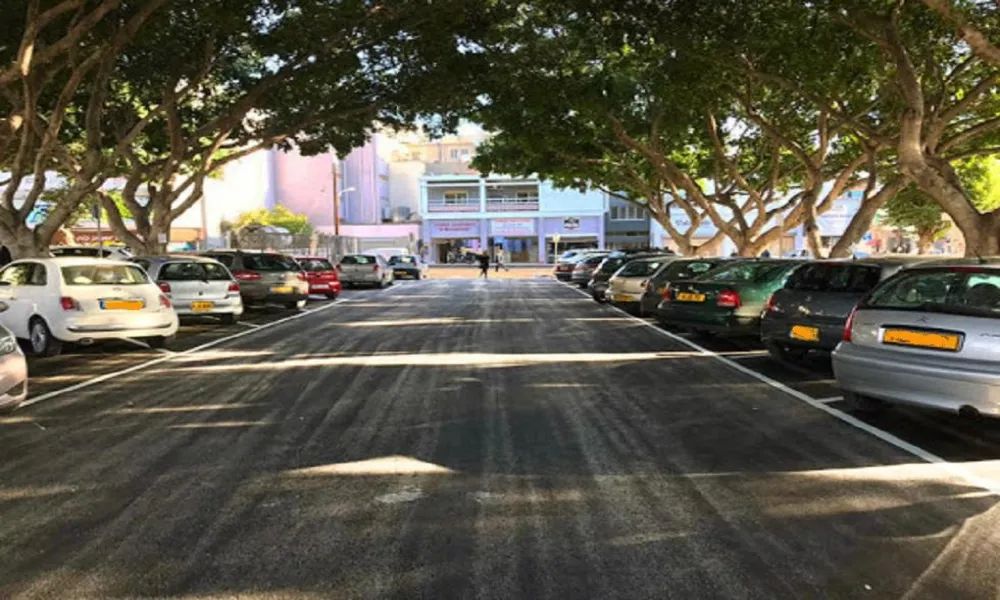
A Question of Basic Physics
The recent opinion piece in Politis, asking how many cars central Limassol can realistically accommodate, touches on the central blind spot of local transport politics. For decades, the municipal response to traffic gridlock has operated on the assumption that if drivers demand to enter the historic core, the city must find a way to squeeze them in.
Streets do not possess infinite elasticity. The historical center of Limassol was laid out for pedestrians, draft animals, and compact human commerce. Its narrow rights-of-way, tight turning radii, and dense shopfronts cannot be enlarged without tearing down the historical fabric that makes the district attractive in the first place. Pretending that engineering tweaks, selective one-way conversions, or stacking cars in multi-storey garages will solve the issue ignores basic spatial mathematics.
The Self-Defeating Pursuit of More Vehicle Capacity
Whenever parking spaces fill up, business representatives and councillors argue that trade is suffering and more parking must be constructed. This logic triggers a well-documented feedback loop known as induced demand.
If the municipality builds two new multi-storey garages providing a thousand extra parking bays in the center, those thousand bays will not sit empty. They will attract an extra thousand vehicles through the narrow entry points of Gladstonos, Navarinou, and the seafront. The bottlenecks do not disappear; they simply shift closer to the destination, creating denser queues, higher localized air pollution, and increased collision risks for pedestrians attempting to navigate crosswalks. A city cannot park its way out of traffic congestion.
Protecting Public Life in the Historic Core
Prioritising private vehicle storage across central streets exacts a heavy toll on daily urban life:
- Pedestrian displacement: When curbsides are lined with parked vehicles, sidewalks remain narrow and obstructed, forcing parents with strollers and people with mobility aids onto the roadway.
- Loss of local commerce dwell time: Shoppers do not spend money from inside moving cars. Vibrant retail districts depend on footfall, outdoor dining, and calm public spaces where visitors feel safe to linger.
- Erosion of neighbourhood character: Dense through-traffic drives long-time residents out of the old quarter, accelerating urban decay and turning residential streets into rat-runs for drivers bypassing main avenues.
A thriving downtown is not measured by the number of cars parked along its curbs, but by the number of people walking, working, and living within it.
Defining the Access Boundary
The real answer to how many cars central Limassol can hold is straightforward: only as many as can circulate without degrading pedestrian safety and neighbourhood quality. Achieving that balance requires structural management:
- Eliminating through-traffic: The old center must cease to operate as a convenient shortcut between east and west Limassol. Access should be restricted to local destinations through looped street layouts that force through-traffic onto perimeter arterials.
- Low Emission and Access Zones (ZTL): Implementing automated camera enforcement at core entry points ensures that only residents, emergency responders, hotel guests, and scheduled delivery couriers can enter sensitive historical lanes during peak hours.
- Perimeter interception: Peripheral Park and Ride hubs connected by high-frequency electric shuttles must intercept visitors before they enter congested quarters, transforming arrival into a predictable, stress-free routine.
Limassol must face the reality that its historic core cannot store the fleet of a sprawling metropolis. The Municipal Council needs to stop promising unachievable vehicular access and begin actively managing urban space for human life.
--- Reference: Based on the opinion article published by [Politis](https://www.politis.com.cy/apopseis/1055303/posa-autokinita-khoraei-telika-to-kentro-tis-lemesou).
About ITS Cyprus
ITS Cyprus brings together public authorities, research and industry to advance Intelligent Transport Systems in Cyprus, through initiatives such as Road to Zero Cyprus for road safety.
Learn more about ITS Cyprus →