Inaccessible Limassol: Why Basic Mobility for Disabled Citizens Must Precede Megaproject Fantasies
An Honest Admission of Systemic Exclusion
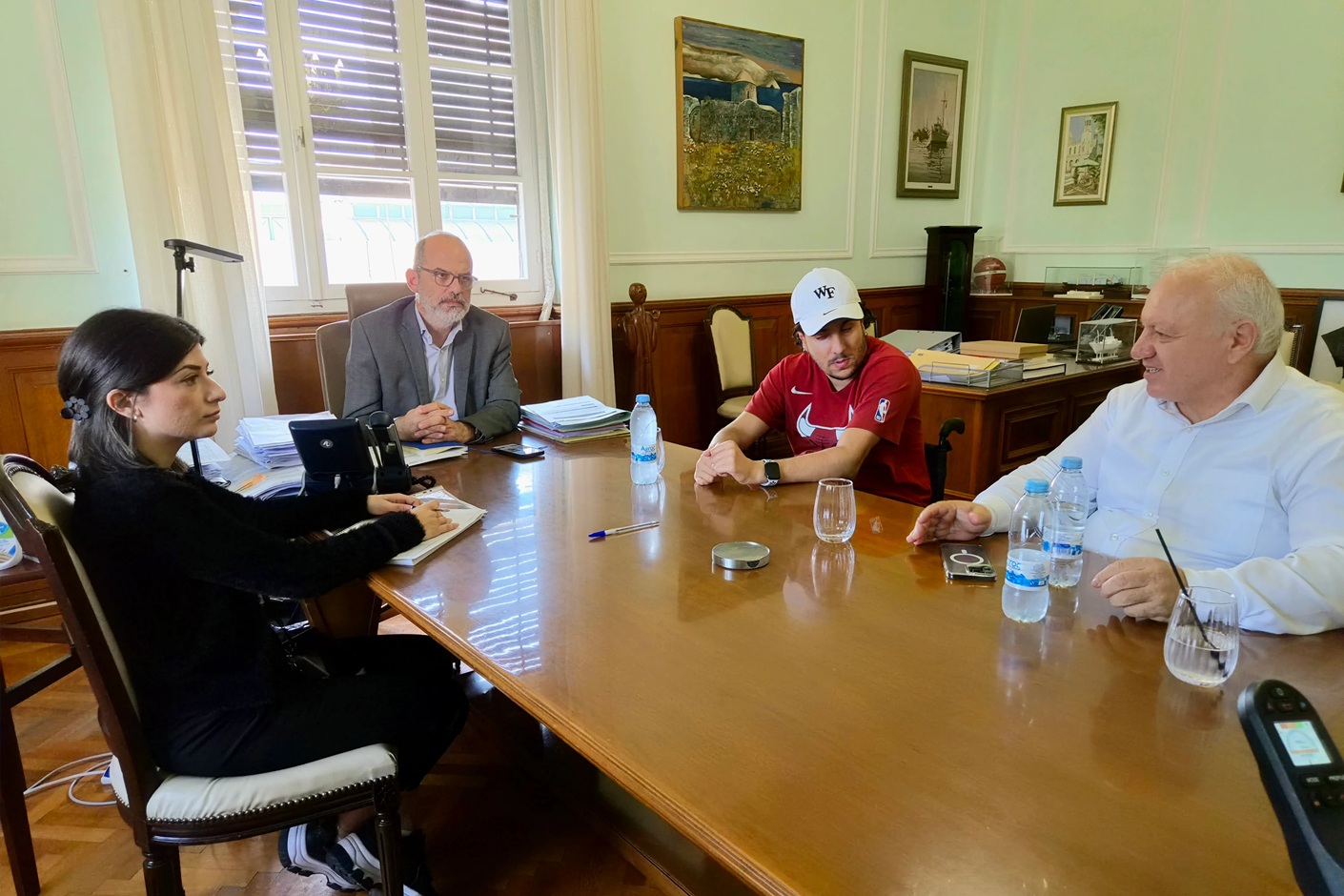
The recent meeting between the Cyprus Paraplegic Organisation (OPAK) and Limassol Mayor Yiannis Armeftis concluded with an unambiguous statement from the city leader: Limassol is simply not a friendly, accessible city for people with disabilities. While political candour is welcome, acknowledging this reality without undertaking immediate, aggressive enforcement only highlights the scale of daily exclusion faced by vulnerable citizens.
The daily accounts shared by wheelchair users in Limassol illustrate an urban environment built on hostile barriers. Broken pavements, absent drop-kerbs, utility poles planted directly in the middle of tactile blind walkways, and crosswalk ramps completely blocked by parked private cars define routine navigation. When people using electric wheelchairs are forced to abandon footpaths and roll into live traffic lanes among heavy SUVs because a driver chose to park across an accessibility ramp, road safety has collapsed at its most fundamental level.
Broken Lifts and Blocked Bays: The Public Transport Reality
Accessibility is not confined to horizontal pavements. It dictates whether citizens can participate in public life and access employment.
The incident recounted by OPAK officials, in which a member using an electric wheelchair was trapped inside a municipal bus for more than an hour and a half because the access lift broke down, while facing complaints from stranded fellow passengers, captures the daily humiliation imposed by defective infrastructure. A public transit network that promotes low-emission electric fleets while failing to maintain basic mechanical ramps cannot claim to offer universal public service.
Equally severe is the persistent invasion of designated disabled parking bays. Both on municipal streets and along the coastal promenade, bays meant for wheelchair-accessible vans are routinely occupied by unauthorized drivers who face negligible chances of receiving an electronic fine. The recent suggestion that the city cannot control illegal parking because it employs only ten municipal traffic wardens represents an administrative excuse. Modern cities enforce curb management not by deploying armies of foot patrol officers, but through automated camera-equipped scan vehicles that detect illegal parking on sidewalks and disabled bays instantly.
The Misleading Logic of One-Way Conversions
During the meeting, municipal officials repeated the argument that blanket one-way street conversions, such as those planned for Neapolis and Anexartisias, are intended to organize parking on one side so footpaths can remain unobstructed.
This rationale mistakes accommodation for planning. Surrendering precious street width to formalized parking bays does not protect vulnerable users. Widened one-way traffic lanes naturally encourage higher motor speeds, making mid-block street crossings far more terrifying for disabled individuals, seniors, and parents with prams. A genuine Safe System prioritizes the most vulnerable user first. Protecting a wheelchair user does not mean carving out convenient curbside parking for motorists; it means continuous physical barriers, raised pedestrian crossings, and zero tolerance for pavement parking.
True Progress Begins at Ground Level
Urban accessibility is the single most reliable test of whether a city is civilised. A street environment engineered to be completely safe, level, and navigable for a citizen in a wheelchair is, by definition, safe and comfortable for children, elderly residents, and every pedestrian.
Before Limassol spends another year debating 500-million-euro tram corridors or building high-rise parking structures, the municipality and the Ministry of Transport must deliver the basics. That means clearing every accessibility ramp with automated enforcement, ensuring every public bus operates with a functioning wheelchair lift, and installing continuous, unblocked pavements across every neighbourhood. Universal accessibility is not an optional welfare luxury; it is a fundamental civil right.
--- Reference: Based on the meeting and statements reported by [Elemesos.com](https://www.elemesos.com/kabanaki-apo-tin-opak-i-lemesos-den-einai-filiki-poli-gia-amea/) and the Cyprus News Agency.
About ITS Cyprus
ITS Cyprus brings together public authorities, research and industry to advance Intelligent Transport Systems in Cyprus, through initiatives such as Road to Zero Cyprus for road safety.
Learn more about ITS Cyprus →