Plates, 300-Euro Fines, and Blanket Bans: Why Parliament's Scooter Proposals Punish Alternatives Instead of Building Safe Streets
Punitive Legislation That Misses the Real Threat
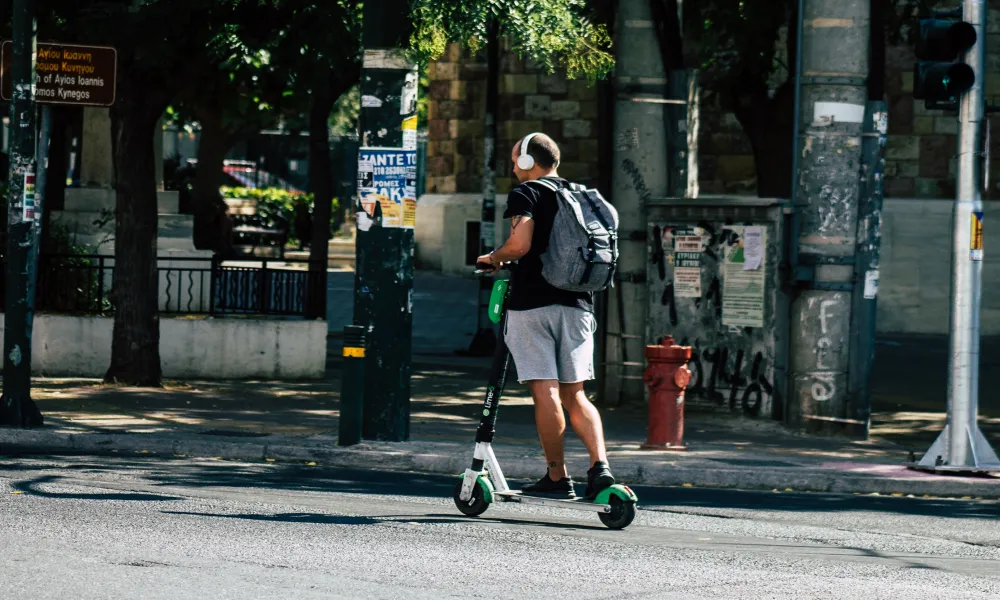
The five legislative proposals tabled before the Parliamentary Transport Committee signal a sharp turn toward punitive restriction in Cyprus’s handling of light electric vehicles. Faced with ongoing street friction and public frustration, lawmakers have proposed creating a state vehicle registry with physical license plates, raising on-the-spot fines from 85 to 300 euros, raising the minimum riding age to seventeen, and imposing blanket municipal bans wherever local authorities have failed to build ten continuous kilometers of cycle tracks or 30 km/h zones.
While preventing road trauma and protecting pedestrians is an urgent priority, these bills fail to distinguish between two completely different realities: privately owned, illegally modified scooters capable of 50 or 60 km/h, and regulated commercial rental fleets. Attempting to legislate micro-mobility off the streets through heavy bureaucracy and disproportionate fines does not make roads safer. It simply punishes sustainable mobility while leaving the actual sources of danger untouched.
The Disproportionate Logic of 300-Euro Fines
Raising the on-the-spot fine to 300 euros for a fifteen-kilogram electric scooter violates basic principles of kinetic physics and legal proportionality. Under the Safe System framework, regulatory penalties must reflect the actual kinetic risk posed to other road users. A two-ton passenger car or heavy SUV traveling at speed carries exponentially greater lethal force than a light electric scooter.
If a minor infraction on a light personal transporter warrants a 300-euro penalty, then by the exact same logic, traffic fines for private motor vehicles would need to be ten times higher. Imposing punitive fines on light vehicles criminalizes clean urban commuting without deterring reckless motorists whose driving habits account for the vast majority of fatal and serious collisions across Cyprus.
Privately Owned Machines vs Regulated Rental Fleets
A rational regulatory framework must target the actual source of street risk. The overwhelming majority of high-speed riding, underage use, and reckless behavior involves privately purchased electric scooters that have been illegally de-restricted or imported without factory speed limiters.
Rather than sending police officers on high-risk street pursuits or forcing taxpayers to fund bureaucratic vehicle registries, the state must intervene along the supply chain:
- Strict customs and retail enforcement: Customs and market surveillance authorities must block the entry and commercial sale of any electric scooter lacking a tamper-proof, factory-locked 20 km/h speed limiter.
- Penalizing illegal modifications: Heavy administrative and criminal penalties must target commercial workshops and retailers that remove factory speed limiters or modify motor output.
- Targeted enforcement and parental accountability: Police enforcement should focus on underage riding, tampering, and riding without protective gear, supported by structured road-safety education in schools.
Intelligent Transport Systems Over Metal Plates
Introducing physical metal registration plates for light electric vehicles creates massive administrative overhead that European transport regulators have largely rejected for standard low-speed devices. For commercial rental fleets, street discipline does not require stamped metal plates; it requires mandatory Intelligent Transport Systems (ITS) written into operating licenses:
- Dynamic GPS geofencing: Shared fleets must automatically throttle down to walking pace when entering pedestrian zones and shut off motor power entirely on prohibited high-speed arterials.
- Integrated smart-lock helmets: Closing the regulatory contradiction where riders are fined for lacking a helmet that rental platforms fail to provide requires mandating electronically locked helmets secured to every shared frame, verified via application sensors before a trip starts.
- Automated fleet telemetry and corporate accountability: Operators must provide live location data via standardized APIs to the Ministry of Transport’s traffic management systems and face direct corporate fines whenever units are left obstructing sidewalks or disabled accessibility ramps.
The Trap of Conditional Municipal Bans
Equally counterproductive is the proposal to prohibit electric scooters across any municipal district lacking ten continuous kilometers of cycleways or 30 km/h zones.
In principle, linking micro-mobility to safe infrastructure aligns with Safe System design. In practice, however, Cypriot municipalities have spent decades failing to deliver basic cycling networks, leaving even painted bus lanes dormant. Making legal scooter circulation conditional on municipal construction rewards local councils for doing nothing: municipalities that refuse to reallocate asphalt from private cars simply watch alternative vehicles disappear. Instead of banning clean transport, Parliament must impose binding statutory deadlines on municipalities to build continuous, physically protected cycle tracks and establish default 30 km/h residential zones.
Proportionality, import control, digital fleet governance, and protected street space—not 300-euro fines and blanket bans—are how European cities achieve Vision Zero.
About ITS Cyprus
ITS Cyprus brings together public authorities, research and industry to advance Intelligent Transport Systems in Cyprus, through initiatives such as Road to Zero Cyprus for road safety.
Learn more about ITS Cyprus →