Reopening Makariou Avenue to Cars: Understanding Shopkeepers’ Frustrations While Avoiding a €21 Million Mistake
A Holiday Proposal Rooted in Real Frustration
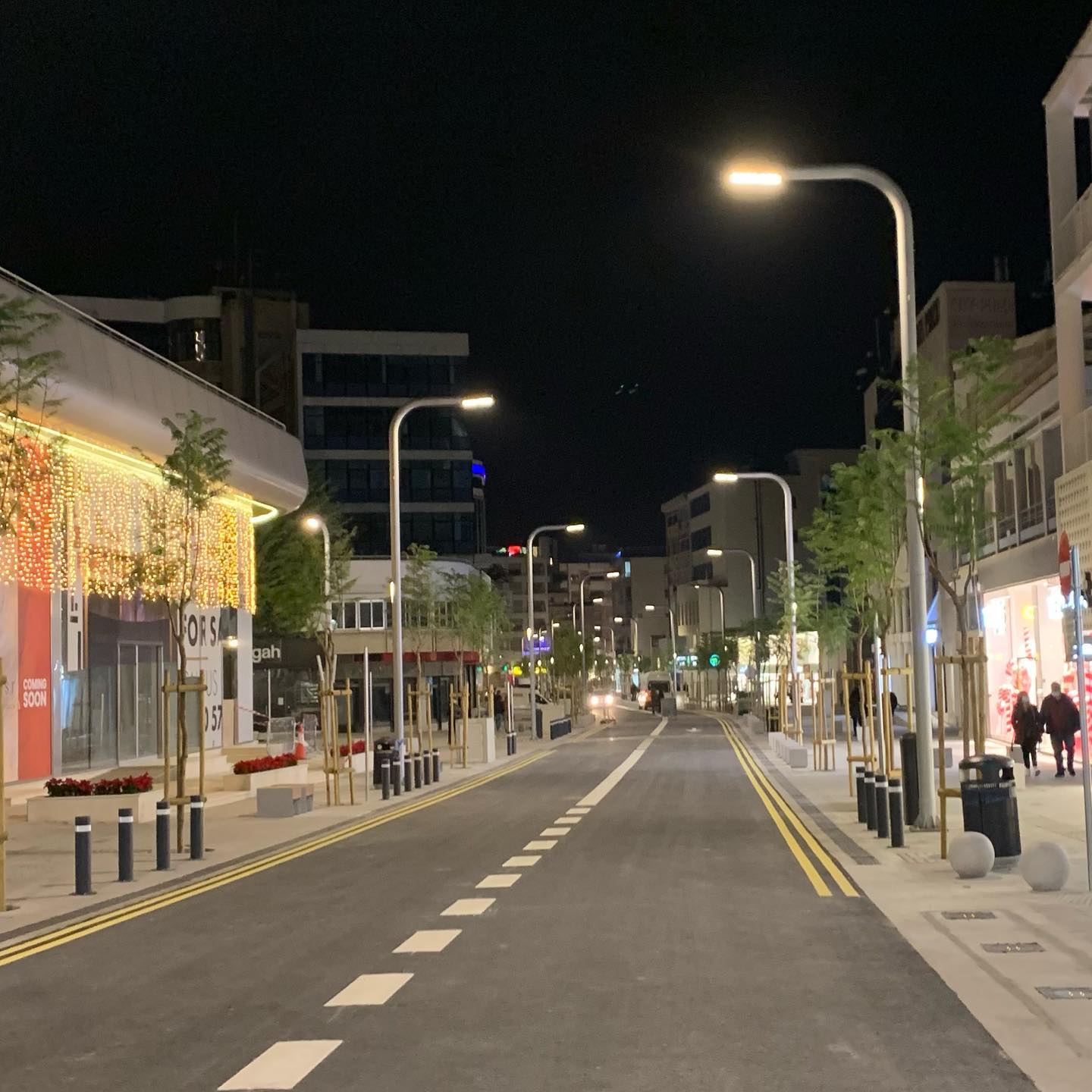
A proposal shared on social media by a Limassol municipal councillor, urging Nicosia Municipality to reopen Makariou Avenue to private cars every Friday, Saturday, and Sunday throughout December as a temporary pilot, taps into a very real debate in the capital. For months, a platform of Makariou shopkeepers, residents, and small business owners has argued that the avenue suffers from an artificial decline, claiming that restricting general vehicle access cut off connectivity between the historic walled city and the modern commercial triangle while driving down footfall and turnover.
Dismissing these complaints outright misses why merchants feel abandoned. When shopkeepers point out that peripheral streets have absorbed diverted traffic, that visitors are confused about where to park, and that an incomplete regeneration phase left parts of the street feeling sterile rather than vibrant, their frustration deserves serious attention. However, diagnosing real operational flaws does not mean that reopening a pedestrian promenade to weekend traffic queues is the cure.
Why Reopening the Avenue to Cars Fails Both Safety and Economics
From a road safety and urban engineering standpoint, reintroducing private motor traffic onto Makariou Avenue creates severe risks while failing to solve the underlying commercial challenges:
- The Safe System conflict: Makariou Avenue was rebuilt on shared-space principles with flush surfaces, wide pedestrian zones, and street furniture designed for walking. Inviting private cars into this environment during December, when families, elderly residents, and children crowd the street, reintroduces dangerous kinetic energy into a pedestrian zone. Under Safe System standards, mixing distracted holiday drivers searching for non-existent curbside parking with pedestrians on level surfaces creates predictable collision hazards. Furthermore, private car queues block public buses, undermining Nicosia’s core transit spine.
- The €21 million EU funding risk: The regeneration of Nicosia’s commercial triangle received €20.995 million in European Union cohesion co-financing under strict binding objectives to reduce car dominance and prioritize public transport and active travel. Because the project remains within its mandatory five-year durability period under EU Cohesion rules, altering its core traffic-calming function, even under the label of a weekend pilot, risks triggering an audit irregularity and forcing Cypriot taxpayers to repay up to €21 million.
- The true causes of retail decline: Both the Cyprus Scientific and Technical Chamber (ETEK) and municipal market reviews have shown that Makariou’s retail challenges stem primarily from the 2012–2013 financial crisis, competition from air-conditioned suburban malls, online shopping, and high commercial rents demanded by certain landlords, rather than the absence of cars driving past shop windows.
Practical Fixes That Can Revive Makariou Without Cars
European cities that transformed struggling high streets, such as Brussels under its Good Move plan, Madrid, and Ljubljana, did not succeed merely by banning cars and walking away. They paired traffic restrictions with active street management and Intelligent Transport Systems (ITS). Nicosia Municipality and the Ministry of Transport can apply five targeted fixes immediately to address shopkeepers' legitimate concerns:
- Clear digital parking guidance (ITS): Visitors frequently avoid the centre not because parking is absent, but because they do not know where to find it. Deploying real-time occupancy sensors and variable message signs (VMS) integrated with mobile navigation apps can guide drivers directly to available spaces in surrounding municipal and private garages, eliminating aimless circling.
- High-frequency, free December Park and Ride shuttles: Operating dedicated electric mini-buses every five to seven minutes from peripheral parking hubs directly into the Makariou, Stasikratous, and Evagorou loop, supported by Transit Signal Priority (TSP) at junctions and live arrival displays, removes access friction for families and older shoppers.
- Fixing the half-finished streetscape: Leaving a conventional asphalt strip down the middle of a shared street sends mixed visual signals and discourages pedestrians from claiming the space. Completing the surface treatment and adding dense shade trees, seating, and cultural programming transforms a sterile transit corridor into a destination where people linger.
- Smart urban logistics (SULP): Using automated retractable bollards and digital access permits to restrict commercial deliveries to early morning off-peak windows keeps the promenade completely clear of vans during retail hours while ensuring shops are stocked smoothly.
- Addressing commercial rents and affordable city living: As ETEK has emphasized, reviving a city centre requires attracting permanent residents and authentic, independent businesses through rent incentives and housing policies rather than relying on transient pass-through motorists.
Guiding the Debate Toward Real Solutions
Shopkeepers on Makariou Avenue are right to demand an accessible, lively, and well-connected city centre. Where the call to reopen the street goes wrong is in assuming that car traffic equals customers. In modern European cities, people shop on foot, while cars simply consume space and create danger.
Protecting €21 million in European investment, upholding Safe System road safety standards, and deploying smart parking, frequent shuttles, and vibrant street programming will give Makariou Avenue’s businesses the sustained footfall they need without turning Nicosia’s flagship promenade back into a congested parking lot.
--- Reference: Based on public municipal proposals, European Commission cohesion funding rules reported by [Politis](https://en.politis.com.cy/news/cy-news/1035279/nicosia-centre-tensions-rise-as-eu-warns-over-makariou-avenue-changes), and the EU Urban Mobility Framework.
About ITS Cyprus
ITS Cyprus brings together public authorities, research and industry to advance Intelligent Transport Systems in Cyprus, through initiatives such as Road to Zero Cyprus for road safety.
Learn more about ITS Cyprus →