The Illusion of Six-Month Solutions: Why Limassol Needs Transport Delivery Over Tram Fantasies
Confronting the Cycle of Empty Political Promises
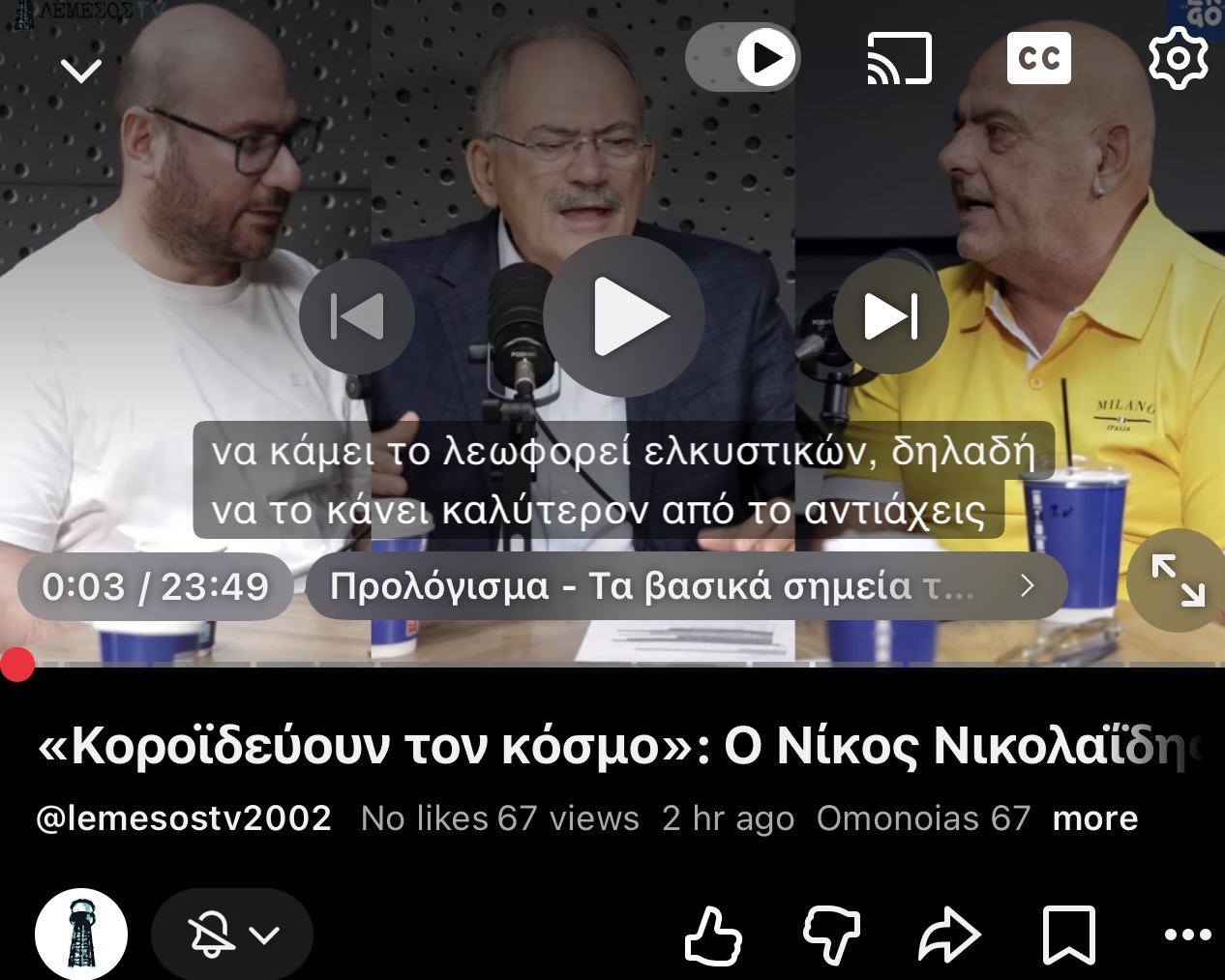
The recent interview of former Limassol Mayor and former Minister of Communications and Works Nicos Nicolaides on Lemesos TV offered a sober, experienced assessment of the city's transport stagnation. In direct remarks regarding local politics, Nicolaides noted that anyone claiming urban gridlock can be solved in six months is either deceiving the public or fundamentally fails to grasp the scale of the problem.
His critique touches the core disease of Cypriot urban governance: the total lack of administrative continuity. Every time a new municipal council or government takes office, existing technical studies are discredited, approved master plans are shelved, and expensive new consultancies are commissioned. Instead of building on previous work, each administration attempts to tear down what came before. The casualties of this endless reset are the commuters, students, and residents of Limassol who spend their daily lives trapped in worsening traffic queues.
The Shelf Life of SUMP and the Distraction of Light Rail
Years ago, the state paid substantial sums to international and local transport experts to produce the Sustainable Urban Mobility Plan for Limassol. That comprehensive plan outlined clear, funded interventions over a ten-year horizon, prioritizing bus fleet expansion, continuous transit corridors, traffic signal priority, and network management.
Instead of executing those recommendations, local debate has been diverted toward speculative megaprojects, most notably a 500-million-euro tram line along the seafront and Aktaia Odos. As Nicolaides highlighted, promoting a half-billion-euro light rail corridor to boost real estate values for luxury seafront plots does nothing for working families living in northern districts like Kapsalos, Mesa Geitonia, or Ayios Ioannis.
Even worse, running a separate rail line along the coast threatens to cannibalize Line 30. That single high-frequency bus route generates the ticket revenues that keep the rest of the regional transport network alive, funding rural services to remote mountain villages and daily school runs for twelve thousand children. Damaging the working backbone of the bus company to build an isolated seafront showcase is transport planning at its most regressive.
Failure at the Most Basic Operational Level
While municipal leaders debate twenty-year rail dreams, local authorities continue to fail at basic street management:
- Blocked bus stops: Bus bays across the city remain routinely obstructed by illegally parked private cars. Bus drivers are forced to stop in active travel lanes to board passengers, creating dangerous roadway conflicts and triggering hostile horn-honking behind them.
- Jurisdictional paralysis: When citizens report illegal parking, municipal traffic wardens and the traffic police routinely pass responsibility back and forth. The municipal enforcement unit remains chronically understaffed, leaving thousands of daily violations completely unaddressed.
- Substandard passenger facilities: Commuters wait for buses exposed to extreme heat under damaged or inadequate shelters, often forced to stand on unpaved verges because proper platforms were never installed.
A city that cannot protect a painted bus stop from illegal parking or maintain a clean passenger shelter will never possess the institutional capacity to construct and manage an urban railway.
Real Priority for Public Transit on Plain Asphalt
Solving mobility in Limassol does not require reinventing the wheel or awaiting hundreds of millions in speculative capital. It requires disciplined execution of the plans already approved:
- Enforcing the Sustainable Urban Mobility Plan: The Ministry of Transport and the municipal alliance must fund and implement the existing SUMP measures rather than ordering repetitive studies that delay physical construction.
- Rapid transit priority for buses: Existing painted corridors on the seafront and primary arterials must be physically segregated with concrete curbs and protected by automated enforcement cameras, delivering the speed advantage of rail on simple asphalt.
- Coordinated urban parking management: The new Smart Parking platform must be operated as a demand-management tool rather than a passive revenue box, preventing vehicles from squatting on curbsides all day and directing drivers to peripheral Park and Ride facilities.
Limassol must break free from the cycle of grand promises and political reinvention. What the city needs is not another round of headlines about utopian trains, but the quiet, relentless determination to make public buses fast, reliable, and respected on every street.
--- Reference: Based on the televised interview with former Mayor Nicos Nicolaides on [Lemesos TV](https://youtu.be/iikLUjVNd3w).
About ITS Cyprus
ITS Cyprus brings together public authorities, research and industry to advance Intelligent Transport Systems in Cyprus, through initiatives such as Road to Zero Cyprus for road safety.
Learn more about ITS Cyprus →