Moving People Out of Cars, Not Off the Bus: Why a Seaside Tram Misses Limassol’s Real Mobility Crisis
The recent public discussion surrounding a potential tram network in Limassol has brought a welcome wave of transport ambition back to the city. Statements from transport officials and academic research teams rightly emphasize that an investment reaching hundreds of millions of euros requires exhaustive feasibility and demand modeling before any public commitments are made.
However, as public excitement builds around architectural renders and coastal visions, the debate must remain grounded in the first principle of sustainable transport planning: modal shift.
The critical transport challenge facing Limassol is not how to upgrade a corridor that already possesses functioning, high-patronage public transport. It is how to remove thousands of private motor vehicles from gridlocked commuter arteries during morning and afternoon peak hours. If a light rail system does not directly target commuter and school-run traffic, the city will commit massive capital while leaving its primary mobility crisis unsolved.
The Coastal Illusion: Molos and Line 30
Whenever light rail is discussed in Limassol, public attention immediately gravitated toward the seafront: the Molos promenade and 28th October Avenue.
While a rail corridor running along the Mediterranean looks appealing in promotional renderings, examining the corridor through a transport architecture lens reveals fundamental flaws:
- A Leisure and Hospitality Corridor: The coastal strip is primarily a recreational, tourist, and hospitality axis. It serves visitors, weekend footfall, and beachfront venues, but it does not represent the origin-destination spine for daily domestic commuting or school trips.
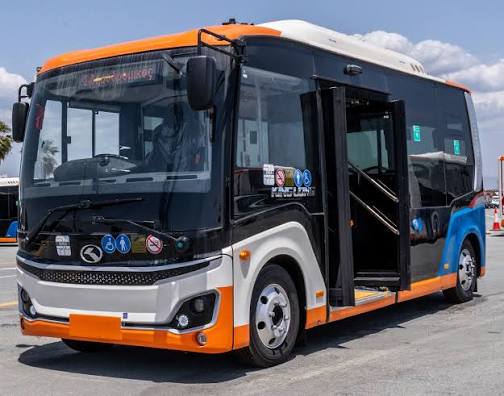
- Cannibalizing Existing Success: EMEL's Bus Line 30 operating along the seafront is arguably the single most patronized and financially resilient bus route in Cyprus. Laying fixed rail on the exact same alignment substitutes one transit mode for another rather than solving an unserved transit demand.
- The Modal Shift Principle: The fundamental objective of mass transit investment is to shift people from private cars into public transport, not from buses into trams.
- Severe Construction Disruption: Constructing fixed-rail infrastructure within the narrow, dense urban fabric of the coastal avenue would entail years of street closures, utility relocation, and economic disruption for local businesses, with minimal net reduction in private car journeys across greater Limassol.
Enhancing the Seafront Without Rail
The coastal strip certainly requires ongoing public transport enhancements, but fixed light rail is an ill-suited tool for that specific alignment.
The operational solution for Line 30 and the seaside is far more agile, cost-effective, and rapid to deploy:
- Dedicated Bus Lanes: Enforcing physical right-of-way priority along the seafront to protect existing bus services from general traffic congestion.
- High-Capacity Fleet Upgrades: Introducing high-capacity articulated (bendy) or electric double-decker buses to absorb seasonal tourist peaks without ground-disturbing track construction.
- Transit Signal Priority (TSP): Deploying Intelligent Transport Systems (ITS) at signalized junctions to grant approaching buses green phases automatically.
Targeting the Real Crisis: Suburbs, Commuting, and School Runs
If Limassol is to justify a high-capacity mass transit system, the alignment must penetrate the corridors where private car dependency originates:
- North–South and East–West Commuter Arteries: Linking outer residential municipalities—such as Polemidia, Mesa Geitonia, Agios Athanasios, and Ypsonas—with primary commercial hubs, office districts, and the urban core.
- The School and University Network: Connecting dense educational nodes, including the Cyprus University of Technology (CUT / TEPAK) city campuses, secondary school clusters, and major private academies where daily private vehicle drop-offs generate severe neighborhood-level gridlock.
- Motorway Interception via Park & Ride: Placing transit hubs strategically along highway feeder junctions to intercept regional vehicle traffic before it enters the municipal street network.
A transit spine structured around daily domestic journeys addresses the structural drivers of congestion and road trauma. It offers working families and students a dependable, time-competitive alternative to mandatory private car ownership.
Evidence-Based Infrastructure Over Vanity Projects
Academic teams evaluating alternatives for Limassol have highlighted that dozens of transit scenarios are under assessment across the wider metropolitan area, confirming that planning is not restricted to the coast.
Light rail can serve as an exceptional instrument for urban regeneration, capacity expansion, and Safe System alignment. But it must be applied where it eliminates private vehicle miles, improves road safety, and unlocks daily commuter bottlenecks—not deployed as a coastal showcase that disrupts the city's most functional existing bus line.
Road to Zero Cyprus Initiative
This website is part of a broader national initiative by ITS Cyprus to implement Intelligent Transport Systems and advocate for Safe System policies to eliminate road traffic trauma across Cyprus.
Learn more about ITS Cyprus →